Print Collection
The Print Collection has been part of the Split City Museum since its foundation in 1948 and comprises individual print sheets, graphic portfolios, and books by both local and international artists.
The works date from the 17th to the 21st century and are of considerable documentary value, providing a vivid record of the changing appearance of Split and its surroundings over time, as well as information about the local population, notable individuals, and historical events in Dalmatia.
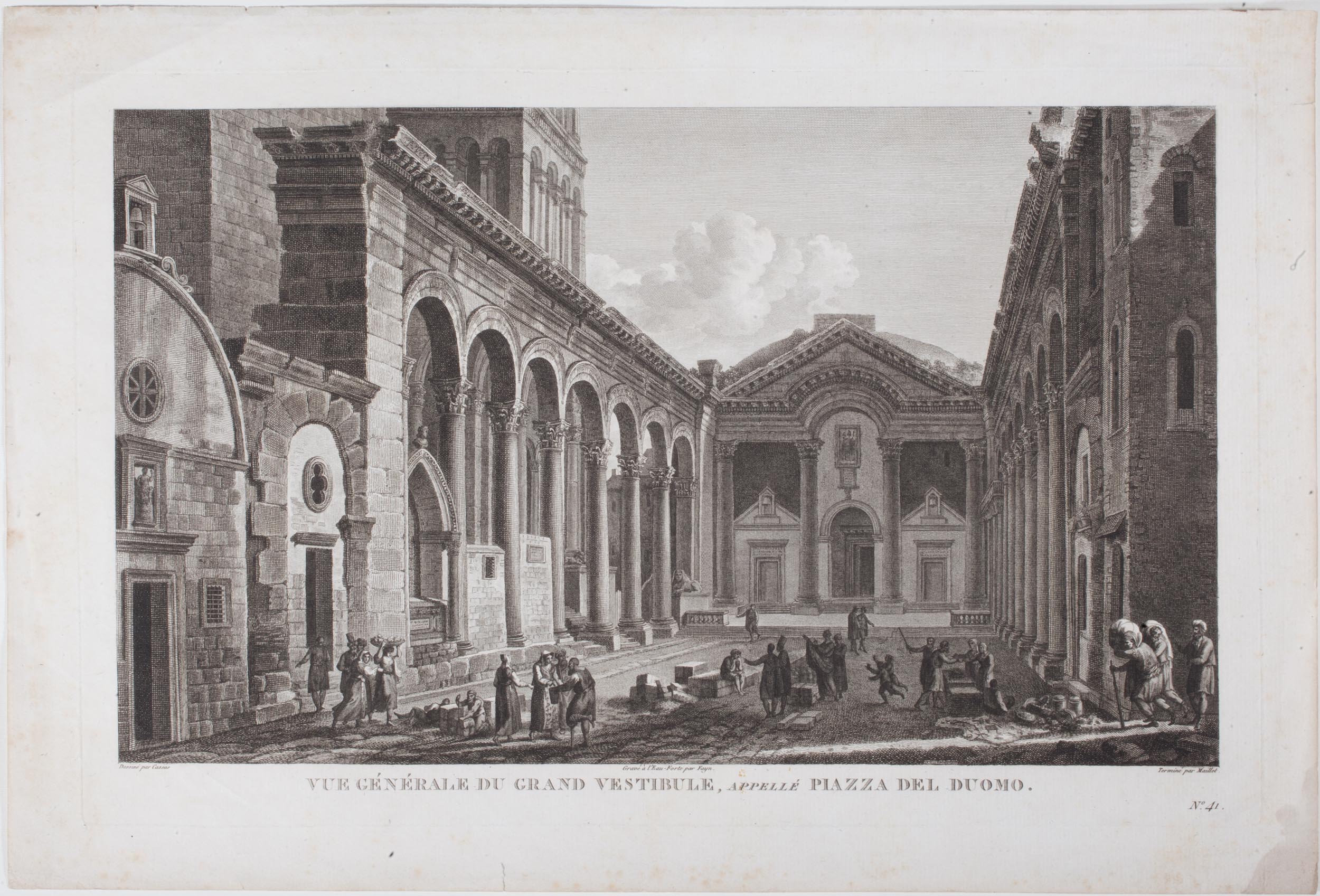
Books and individual prints from Robert Adam’s Ruins of the Palace of the Emperor Diocletian at Spalatro in Dalmatia (London, 1764) and Louis-François Cassas and Joseph Lavallée’s Voyage pittoresque et historique de l'Istrie et de la Dalmatie (Paris, 1802) provide valuable evidence of the life and appearance of the city and its surroundings in the 18th century. The Collection also includes one of four etchings by Bartolomeo Nerici, which are reproductions of the engraved drawings from Adam’s book.
The prints from Francesco Bratanich’s Album della antichità da Spalato disegnato con cenni del Dr. Francesco Carrara (Padua, 1847) and Francesco Carrare’s La Dalmazia descritta con 48 tavole miniate, rappresentanti i principali costumi nazionali (Zadar, 1848), together with individual etchings from J. Gardner Wilkinson’s Dalmatia and Montenegro, I–II (London, 1848), provide valuable visual documentation of the city of Split and its inhabitants in the first half of the 19th century. The Collection offers a vivid portrayal of Split’s appearance, daily life, and prominent figures in the first half of the 20th century through the works of Croatian printmakers such as Nikola Jakšić, Tomislav Krizman, Vladimir Kirin, Anđel Uvodić, Ante Katunarić, Petar Bibić, and Antun Zuppa. It also contains works by foreign artists who drew inspiration from the city’s natural and cultural beauty, with the 1920s woodcuts by Austrian artists Emma Bormann and Wilhelm Sauer standing out for their exceptional artistic quality.